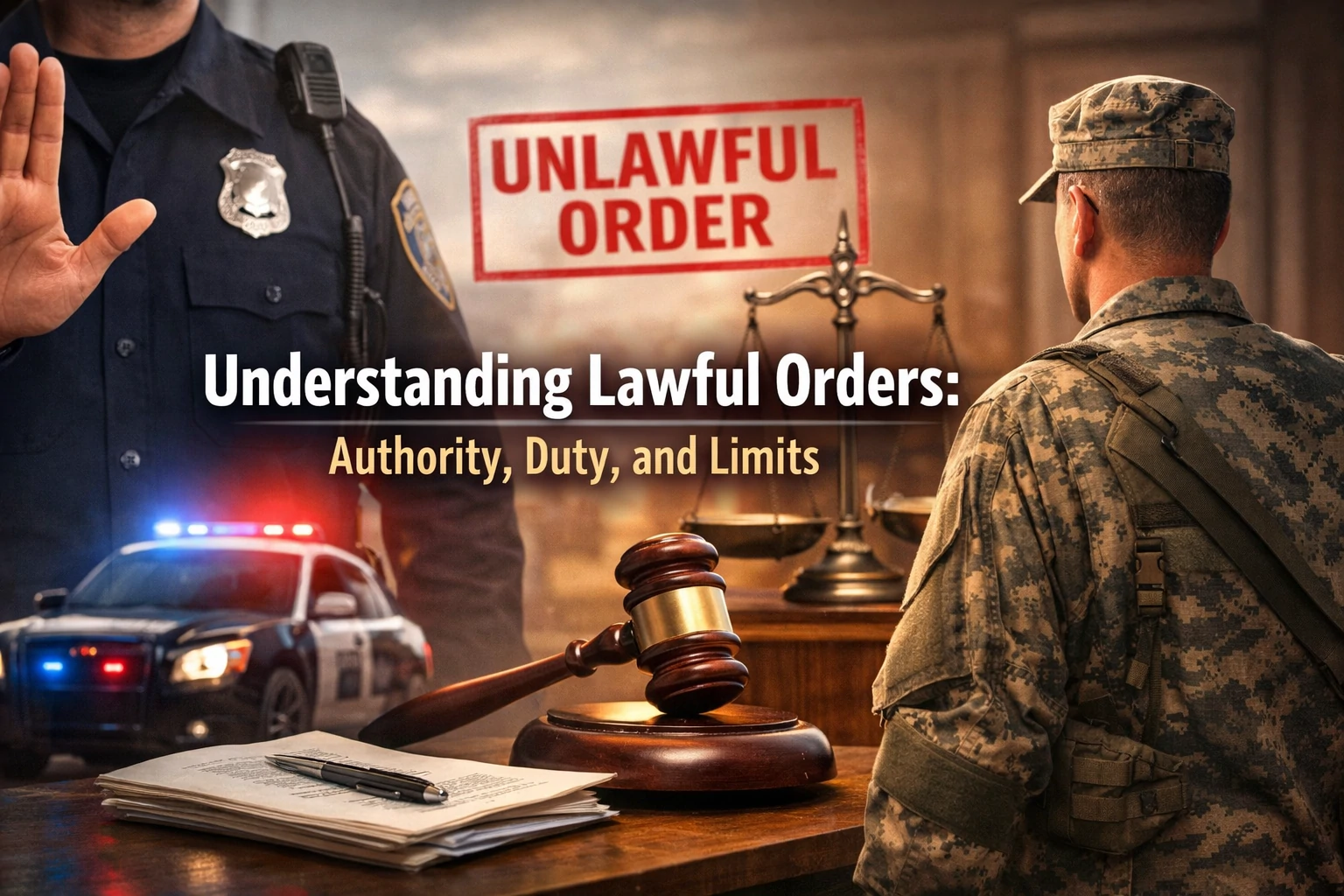
A lawful order is more than just a command. It has power under the law. You must follow it if it comes from someone with legal authority. This can be a police officer, a judge, or a military leader. These people give orders that help keep peace, protect lives, and support the law.
Lawful orders help society run smoothly. They let trained officials act fast in emergencies. These commands can control danger, guide people to safety, and stop harm. But not every order is legal. The law must support the command. It must also protect your rights.
To be lawful, the command must follow the law. It must come from someone doing their job. The order must not go against your rights. Some orders may sound official but may not be. Learning the difference helps you stay safe and make smart choices.
Definition of a Lawful Order
A lawful order is more than just a command. It has legal power. You must follow it if it comes from someone with real authority. This can be a police officer, a judge, or a military leader. These people give orders that protect lives, keep peace, and enforce the law.
Lawful orders help society work. They let trained officials act fast in danger. These commands can guide people, prevent harm, and control risk. But not every command is legal. The law must support it. It must also respect your rights.
To count as lawful, the order must follow the law. It must come from someone doing their duty. It cannot break your rights. Some commands may sound official but may not be valid. Knowing the difference helps you stay safe and make smart choices.
The Legal Requirements for a Lawful Order
A lawful order must meet clear legal standards. It must follow the law, respect your rights, and come from someone with real authority. These basic rules help protect you in any situation.
The first rule is authority. The person giving the order must hold a legal position. This includes police officers, judges, or military officials. Their role gives them the power to issue commands within certain limits.
The second rule is duty. The order must connect to their job. A police officer can tell you to move from a dangerous area. A judge can tell you to appear in court. But they cannot ask you to do something outside their official role.
The third rule is legality. The order must not break the law or take away your rights. Even people in power must follow legal limits. No one can order you to do something illegal or harmful.
If an order fails any of these three rules, it is not lawful. You do not have to follow it. Stay calm, stay safe, and speak to a lawyer if needed. Knowing the law helps you make the right choice.
Authority, Duty, and Legal Limits Explained
Authority means the person giving the order holds legal power under the law. This power comes from their official position, not from personal opinion. Police officers, judges, and military leaders receive authority through laws that define their roles.
Duty connects the order to that person’s job. An official cannot give commands outside their assigned responsibilities. A police officer may control a crime scene, but cannot issue orders unrelated to public safety. The order must serve a lawful purpose tied to their role.
Legal limits protect individual rights. Even those with authority must follow constitutional rules. No official can demand illegal acts or ignore basic protections. Authority and duty must always operate within legal boundaries.
Lawful Orders Issued by Police Officers
Police can issue lawful commands during traffic stops or public safety events. These may include asking you to show your license, step out of the car, or leave an unsafe area. Refusing a lawful order from police may lead to arrest or other legal consequences.
However, police cannot order you to do something illegal. If the command breaks your rights or goes beyond their authority, it may be unlawful. You still must stay calm and respectful. You can later challenge the order in court with a lawyer.
When Police Orders May Become Unlawful
Police have authority, but that authority has limits. An order may become unlawful if it goes beyond legal boundaries. Officers must respect constitutional rights at all times.
An officer cannot demand entry into a private home without a warrant unless a legal exception applies. They also cannot order someone to give up the right to remain silent or force consent without cause.
An order that targets someone unfairly or lacks legal basis may not be valid. Courts review these situations carefully. Power must stay within the law. If you believe an order crossed the line, remain calm and avoid confrontation. Legal review can happen later in court.
Lawful Orders Under Military Law
In the military, following lawful orders is a duty. Military law punishes service members who refuse legal commands. The Uniform Code of Military Justice defines what counts as lawful. An order must have a valid purpose and must not break military law or general law. Soldiers cannot be forced to carry out unlawful acts, even if ordered. If a superior gives an illegal order, the service member must report it. This protects both the law and human rights.
Legal Consequences of Disobeying a Lawful Order
Refusing a lawful order can lead to serious problems. In civilian life, it may lead to arrest, fines, or court action. In the military, it may lead to punishment or discharge. Disobeying lawful orders shows disrespect to the law and public safety.
Always stay calm and follow clear commands from lawful authorities. If you believe the order was not legal, you can speak with a lawyer afterward.
Lawful vs. Unlawful Orders
It is important to know the difference. A lawful order stays within the law. An unlawful order goes beyond it or violates rights. Example: An officer telling you to pull over is lawful. An officer telling you to let them search your home without a warrant may not be.
Knowing your rights helps you stay safe and informed. You do not have to obey illegal orders, but you must handle the situation with care.
Final Guidance
A lawful order is more than just a command. It must follow the law. It must come from someone with real authority. This could be a police officer, a judge, or a military leader. Their power to give orders comes from the law, not just their position.
Knowing what makes an order lawful helps you stay safe. It helps you make smart choices during traffic stops, court hearings, or emergencies. You should always stay calm and listen. But you also have the right to question any order that feels wrong or unfair.
Respect the law at all times. Know your rights and stand by them. If something seems unlawful, do not argue on the spot. Follow the order if it keeps you safe, then speak to a lawyer. Getting legal help is the best way to protect yourself and take the right steps forward.
To better understand your rights and legal options, read our guide: When Should I Hire an Elder Law Attorney? A Complete Guide
Disclaimer: This article gives basic legal information. It does not provide legal advice. Talk to a licensed attorney about your case. Always get legal help before making decisions.