
Apple has long claimed to put privacy first. Many users believed it. They trusted that Apple would protect their personal information. But that trust came under pressure when reports revealed that Apple may have recorded private conversations through Siri.
People expected Siri to listen only after hearing its activation phrase. They did not expect Siri to turn on by mistake. When users learned that contractors had listened to some of those voice clips, it felt like a violation. It raised serious questions about how much control people really had over their own data.
Soon after, users filed a lawsuit. They said Apple had crossed a line. They argued the company had collected voice data without full consent. Apple pushed back but later offered a large settlement. The case did not end in trial, but the message was clear. Even trusted tech companies must answer when they lose public confidence.
This article breaks down the story behind the lawsuit. It explains how Siri triggered the case, what the settlement means, who can receive money, and what this means for digital privacy going forward.
Why People Sued Apple Over Siri
The lawsuit did not start with one person. It grew from a series of reports, stories, and user complaints. People said Siri had turned on during private moments. Some did not say Hey Siri. Others never knew Siri had recorded anything at all. When they heard about contractors listening to those audio clips, they felt betrayed.
These recordings were not just data points. Some included personal talks, health discussions, or even legal conversations. That made people angry. They believed Apple had promised strong privacy. Instead, they felt exposed.
The lawsuit claimed Apple broke several privacy laws. Users said they never gave full permission. They also claimed Apple had not clearly warned them. They believed Apple had acted without proper notice and had handled the recordings in ways they would not have agreed to.
Apple said it had good reasons. It claimed the recordings helped improve Siri. It also said it removed identifying details before sending clips to workers. Still, the public pressure grew too strong. Apple paused the program. Then it changed Siri settings in later software updates. But the lawsuit still moved ahead.
Apple’s Decision to Settle
Apple had two options. It could fight the lawsuit in court. Or it could offer a deal to end it. The company chose the second path. It agreed to pay a large sum to settle the case. That did not mean Apple admitted guilt. In legal terms, a settlement does not equal fault. But it does offer relief to users and helps the company avoid a long trial.
The total amount in the settlement was $25 million. Most of that money would go to users who had Siri on during a specific time period. A smaller part would cover legal costs and fees.
Apple also made changes to how Siri works. It added clearer settings. It gave users the option to delete recordings. It stopped sending voice data to contractors. These changes showed that Apple had learned something from the case, even if it did not admit doing anything wrong.
How Much Money the Settlement Pays
Apple agreed to pay $25 million to end the case. That full amount will not go straight to users. The court must divide the total into parts. A large share will cover legal fees, expert costs, and administration. Lawyers often receive about 25% to 30% of the total in class action cases. That leaves the rest for users who qualify.
Each user will get a share of what remains. Reports suggest most payouts will be close to $12. Some users may receive more, others less. The final amount depends on how many people file claims. If fewer users apply, the payout rises. If many apply, the money gets split across more people, so the amount drops.
This settlement is about more than cash. It sends a message. Users want control over their voice and personal data. Even a small check shows that the system listened. You cannot expect to get rich from this case. But you can expect to take part in a moment that pushed privacy rights forward.
Who Can Get Paid from the Siri Settlement
Not every Apple user will get money. Only those who used Siri during certain years can claim part of the payment. The key period runs from late 2011 through early 2021. If you owned an iPhone, iPad, Mac, or HomePod during that time and used Siri, you may qualify.
| Requirement | Detail |
|---|---|
| Time Period | 2011 to 2021 |
| Devices Covered | iPhone, iPad, Mac, HomePod |
| Action Needed | Submit claim form |
| Payout Estimate | Around $12 |
| Payment Type | Direct deposit or check |
To receive money, you need to fill out a form. This form asks for simple information. You may need to give your Apple ID and confirm which devices you used. Once you submit the form, the court will review your claim. If it meets the rules, you’ll get a payment once the court gives final approval.
The exact amount each person receives may change. If more people apply, the payout goes down. If fewer people apply, the payout goes up. Most reports expect users to get around $12. That may not sound like much, but for many, the case is about more than money. It is about principle. People want to know their privacy still matters.
How Siri Recordings Raised Privacy Concerns
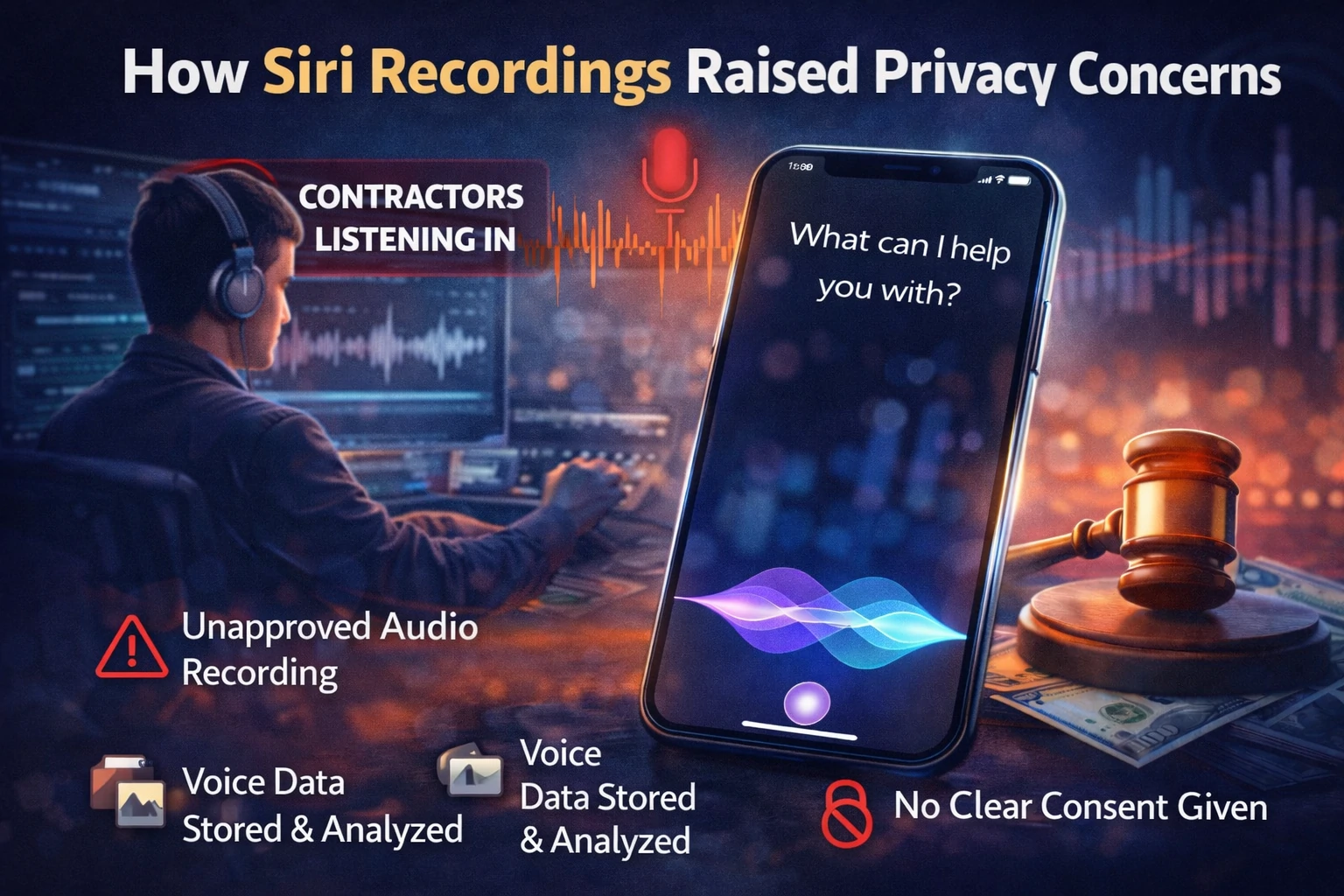
Siri works as a voice assistant. You speak a command, and Siri responds. Normally, it waits until it hears “Hey Siri.” That trigger word tells it to listen. But sometimes Siri activates without it. Loud noise, accidental touches, or other sounds can turn it on.
When that happens, Siri may record whatever it hears. It then sends the audio to Apple servers. From there, the system tries to understand your words and respond. In some cases, human reviewers listened to these recordings to help improve Siri’s accuracy.
The lawsuit focused on these accidental recordings. People did not realize they had been recorded. They never meant to trigger Siri. Worse, they never agreed to let a third-party worker listen to their words. That was the core issue.
People wanted a voice tool that respected their space. What they got felt different. It felt like being watched without knowing it.
How The Public Reacted To Siri news
When the news first broke, many users expressed shock. They had believed Apple took privacy seriously. Now they had doubts. Social media lit up with people sharing their stories. Some turned off Siri. Others dug into their phone settings to protect their data.
Apple fans defended the brand. They said the company responded fast and fixed the issue. Critics said the damage had already been done. They asked why Apple had not warned people from the start.
Even tech experts had mixed views. Some said this was a normal part of AI training. Others said consent must come first. The debate touched a nerve across the industry.
Many people now ask the same question: Can I still trust my smart device?
Cases like the WestJet Passenger Delay Lawsuit show how tech and travel companies both face growing pressure when users feel ignored.
What the Settlement Means Going Forward
This case may seem like it’s only about Apple. In truth, it affects every major tech company. Siri is not alone. Other voice tools work the same way. Alexa, Google Assistant, and other services all use your voice to learn and improve. If companies don’t set clear rules, more lawsuits may come.
The Siri case also teaches users a lesson. You cannot assume your data stays private. You must check your settings. You must read the fine print. You must take steps to protect your voice and your choices.
After this lawsuit, Apple changed how Siri handles audio. It lets users turn off recording reviews. It also lets them delete Siri history. These steps give more control to the user.
Still, the road to trust takes time. The case forced Apple to do better. It showed that users will take action when they feel ignored.
Apple Siri Settlement Payout Date
Many users want to know when they will receive money. The court must approve the deal first. Until then, no payout can happen. This review process takes time. Legal teams, judges, and administrators must complete each step before payments go out.
Once the court gives final approval, payments will begin. That may take a few months or more. If there are no delays, checks or direct deposits could arrive in late 2026. Some cases finish fast. Others take longer because of appeals, review errors, or claim volume.
Each approved claim will receive payment. Most users will get it through bank deposit or mailed check. Watch your inbox for official emails. Avoid scams that promise early money. The court will share updates on the real payout date. If you filed a valid claim, just wait for notice. You do not need to follow up unless you move or change contact details.
How To File Your Claim Safely
Apple has not sent checks yet. The court still needs to approve the final details. Once that happens, there will be a website with instructions. This will include:
- Who qualifies
- How to fill the form
- When the deadline ends
- How payments will be made
Only trust the official court-approved website. Avoid scam sites that ask for personal data. If you owned a device with Siri during the correct dates, keep your proof ready. You may need it.
Most payouts will go through direct deposit or mailed checks. You may not get rich, but you’ll be part of a case that made history.
Just like the U.S. Travel Registration Snowbirds Lawsuit, use only official sources when filing a claim.
How Voice Tech May Change Next
This lawsuit did more than create headlines. It changed how people view digital assistants. It made clear that voice tools must respect limits. It also showed courts will step in when privacy rights are at risk.
Apple’s brand depends on trust. This case reminded the world that even trusted brands can fall short. But it also showed that change is possible. With enough pressure, companies will fix their mistakes.
In the future, we may see new rules for all voice tools. Governments may ask for stronger warnings. Users may demand more settings and more control. Apple took a hit but it may lead the way to better tools.
The Siri lawsuit settlement now stands as a turning point. It shows where the lines must be drawn. It proves that people still care about their rights.
Timeline of the Siri Lawsuit and Settlement
| Year | Event |
|---|---|
| 2011 | Siri introduced |
| 2019 | Media reports surface |
| 2020 | Apple pauses audio reviews |
| 2021 | Lawsuit filed |
| 2023 | $25M settlement announced |
| 2026 | Final approval expected |
Final thoughts On User Privacy
The Apple Siri lawsuit was never just about dollars. It was about trust, voice, and control. It forced one of the world’s biggest tech companies to look inward and make real changes. That matters.
If you used Siri during the time covered by the case, check if you qualify. Even if you miss the payout, take a moment to check your settings. Protect your voice. Set limits on your device. Ask questions. Read updates. The tools are in your hands now.
Apple made a promise about privacy. The Siri lawsuit tested that promise. What happens next depends on how we, as users, choose to respond.
FAQs
Who can claim money from the Siri lawsuit?
Anyone who used Siri on an Apple device between 2011 and 2021 may qualify. You must have had Siri enabled during that time and live in the United States.
How much is the payout per person?
Each approved user may receive around $12. The final amount depends on how many people file claims and how much of the $25 million fund remains after legal fees.
When will the Siri settlement money arrive?
The court must approve the settlement before payments begin. Once approved, payments may take several months to process and will go out by check or direct deposit.
Is the claim form available yet?
The claim form will appear on the official settlement website once the court gives final approval. Do not submit your info to unofficial websites or ads.
Why did Apple agree to a settlement?
Apple settled the case to avoid a long trial and growing legal costs. The company did not admit guilt but agreed to pay users and update privacy settings.