
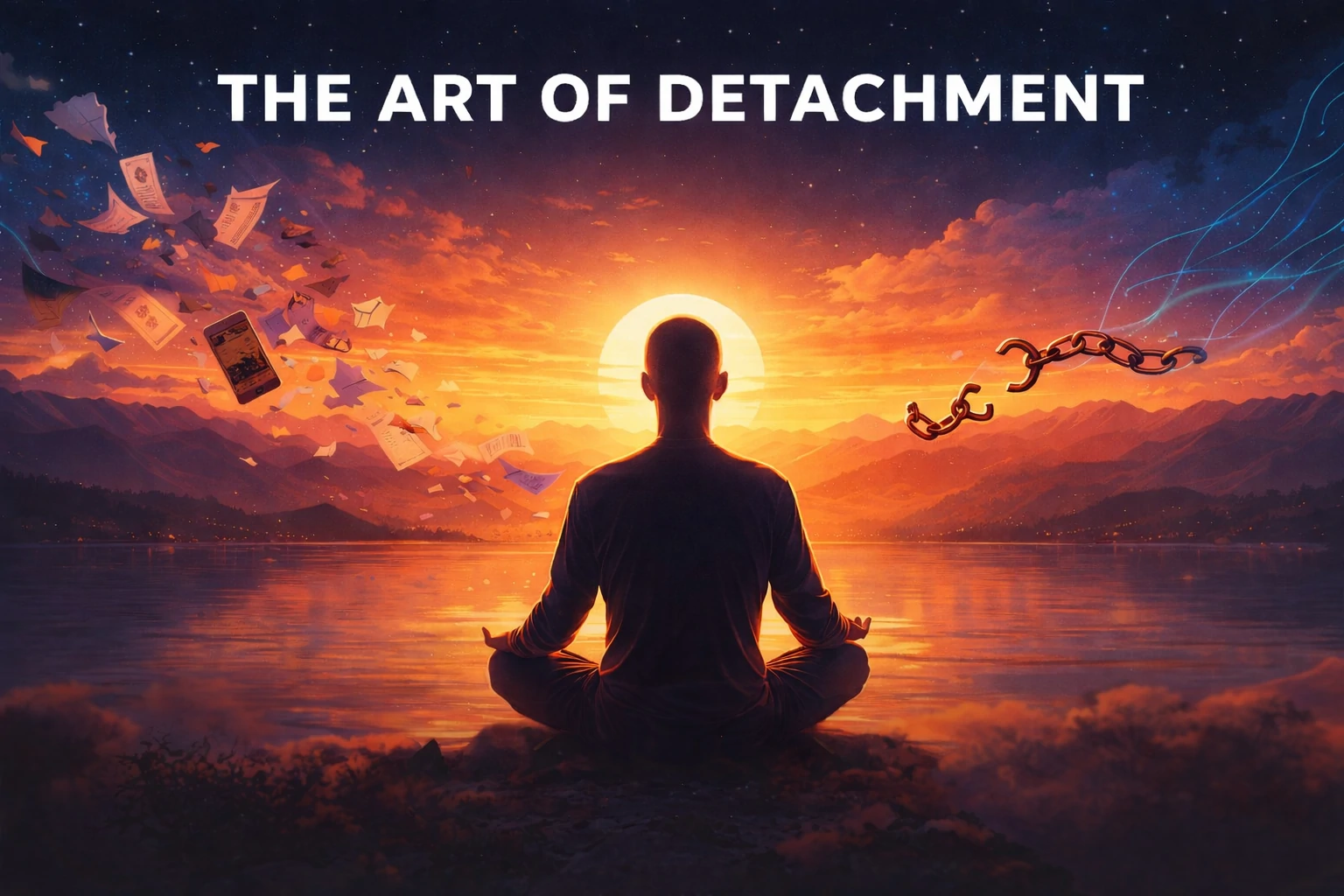
The law of detachment is a simple idea. It says you can work hard toward a goal, yet release the tight grip on the outcome. You act with care. You plan with focus. Then you allow results to unfold without fear or control.
Many people link this concept to self-help books. Others connect it to spiritual thought. The truth sits in the middle. The law of detachment speaks about mindset. It teaches emotional balance during success and loss. It asks a person to trust effort, not panic over results.
This topic matters today. People chase goals at work, in school, and in relationships. Stress grows when results do not match effort. The law of detachment offers another path. It helps you stay calm, clear, and steady even when life shifts.
What Is the Law of Detachment?
The law of detachment means you give your best effort but release the need to control the final result. You still care about your goals. You still plan and act. Yet you do not tie your worth to one outcome.
Detachment does not mean you stop caring. It does not mean you avoid effort. A detached person can work very hard. The key difference lies in emotional balance. You accept that some parts of life stay outside your control.
This idea appears in many traditions. Ancient philosophy speaks about inner peace. Modern psychology talks about emotional regulation. Both point to the same truth. You control your actions. You do not control every result.
When people cling to outcomes, fear grows. Anxiety rises. Clear thought fades. Detachment creates space. That space allows better choices and calm reactions.
Core Principles Behind the Law of Detachment
The law rests on a few clear ideas. Each one supports a balanced life.
| Principle | Simple Meaning |
|---|---|
| Focus on effort | Give your best work each day |
| Release control | Accept that results may vary |
| Trust timing | Believe that growth takes time |
| Stay present | Act in the moment, not in fear |
These ideas may look basic. Their power shows in daily practice. When you focus on effort, you shift attention away from fear. When you release control, you reduce stress. Trust in timing helps patience grow.
Staying present helps you notice what you can improve. You stop replaying past mistakes. You stop predicting worst cases. Your mind returns to the task in front of you.
Many people confuse detachment with weakness. The opposite stands true. It takes strength to act with full effort and then accept any result.
Law of Detachment in Relationships
Relationships bring strong feelings and high expectations. Many people hope their partner will act in certain ways. Hurt appears when reality looks different. The law of detachment teaches you to love with care but without control. You can support someone and still accept that their choices belong to them.
Detachment builds respect and trust. Each person keeps freedom and space to grow. Pressure fades, and honest talk becomes easier. Conflict drops because blame loses power. Love feels lighter when it comes from choice, not force.
Parents also benefit from this mindset. They can guide a child with values and support, yet the child still makes personal decisions. Acceptance reduces anger and regret. Detachment keeps emotion alive but removes the need to control another person.
Detachment at work and success
Work life brings pressure and high expectations. Many people tie their value to a job title or salary. This habit creates stress and fear of failure. The law of detachment breaks that cycle. You prepare well, build skills, and complete tasks with care. After you act, you accept the result without panic.
A job interview offers a clear example. You research the company and answer with honesty. The final choice belongs to the employer. Detachment protects your peace if the answer is no. You learn, adjust, and move forward.
Business owners face risk each day. Sales change and markets shift. A calm leader reviews facts and updates plans without fear. Clear focus leads to better decisions. Success often grows when fear loses control.
Mental Health and Emotional Balance
Mental health improves when attachment to outcomes decreases. Anxiety often grows from fear of loss or failure. Detachment weakens that fear.
A calm mind reacts with logic. It does not jump to worst-case thoughts. Emotional balance helps sleep, focus, and mood. Doctors and therapists often teach similar ideas under different names.
Stress harms the body. High stress can raise blood pressure and weaken immunity. Detachment lowers that stress level. It does not remove problems. It changes your response to them.
The mind works better with space. Detachment creates that space.
How Psychology Explains Detachment
Psychology explains detachment as emotional regulation. It means you respond with awareness instead of fear. A person separates effort from outcome and does not tie self-worth to results. This approach lowers stress and supports mental strength.
Cognitive research shows that thoughts shape emotions. When you believe success defines your value, anxiety rises. When you focus on actions you control, pressure drops. Therapists teach similar methods through acceptance and mindset shifts. Detachment helps people face setbacks with resilience, adjust plans, and move forward without panic.
Common Myths and Confusion
Many myths surround this topic. Some people avoid it because they misunderstand its meaning.
Detachment does not mean you avoid goals.
Detachment does not mean you feel no emotion.
Detachment does not mean you stop caring.
A detached person still feels joy and sadness, yet balance shapes the response. Emotion does not control action. Some believe detachment weakens ambition, but it often builds courage. You take risks without fear because your worth does not depend on one result. Clear thinking grows once these myths fade.
Ways To Practice It Daily
Practice starts with small steps. You do not need big life changes. Set clear goals and focus on actions you control. Replace “I must win” with “I will prepare well.” This shift builds steady effort without fear.
Watch your thoughts each day. Notice when fear appears and ask if you can control that part. If not, release it and return to your next task. This habit keeps your mind calm and clear.
Trust that progress takes time. Setbacks can teach strong lessons. Gratitude helps you focus on what you have and builds strength during hard moments.
A Real-Life Example
Benefits of Living with Detachment
The law of detachment offers many benefits. These gains appear over time with steady practice.
| Benefit | Result in Daily Life |
|---|---|
| Lower stress | Clear thinking under pressure |
| Better focus | Stronger performance |
| Emotional balance | Healthier relationships |
| Greater resilience | Faster recovery from setbacks |
Calm people often make better decisions. Balanced emotions support wise action. Resilience helps you return after failure.
Peace does not mean a problem-free life. It means stable inner ground.
When Detachment Goes Wrong
- Using detachment as an excuse to avoid effort or responsibility
- Confusing detachment with emotional shutdown
- Hiding from problems instead of facing them
- Losing motivation due to lack of clear goals
- Mistaking indifference for healthy emotional balance
Detachment In Spiritual Thought
Many spiritual systems mention detachment. They speak about surrender and trust. These words point to the same core idea.
Spiritual teachers often say attachment causes suffering. Desire itself does not cause pain. Clinging to a fixed result does.
Faith supports detachment. Faith does not remove work. It reduces fear. A person acts with purpose and trusts life’s direction.
This connection explains why the law of detachment appears in both modern self-help and ancient wisdom.
Law of Detachment vs. Indifference
People often confuse detachment with indifference, yet the two differ in an important way. The key difference lies in care and emotional balance. The table below shows how they compare in daily life.
| Aspect | Law of Detachment | Indifference |
|---|---|---|
| Level of Care | Cares deeply about people and goals | Shows little or no care |
| Effort | Gives full effort in actions | Often avoids effort |
| Emotional State | Feels emotion but stays balanced | Appears cold or disconnected |
| Response to Results | Accepts any result with calm | May not react at all |
| Impact on Relationships | Builds trust and respect | Creates distance and disconnection |
Understanding this difference protects the true meaning of detachment. Detachment keeps the heart open and steady. Indifference closes it.
Why It matters today
In closing
The law of detachment teaches a powerful lesson. You control your actions. You do not control every result. This truth may feel simple, yet it changes life in deep ways.
A detached person acts with strength and calm. Goals still matter. Relationships still matter. Work still matters. The emotional grip on outcomes fades.
Peace grows when control loosens. Confidence grows when fear shrinks. Detachment builds resilience in success and loss.
This mindset does not promise a perfect life. It promises balance. In a world full of pressure, that balance may stand as one of the greatest strengths a person can develop.
Common Questions
Q. What is the law of detachment?
The law of detachment means you give your best effort but release control over the outcome. You focus on actions you can manage and accept that results may vary.
Q. How do I practice the law of detachment?
Set clear goals and work toward them with care. After you act, accept the result without fear or self-blame. Keep your focus on effort, not outcome.
Q. How do I practice detachment in daily life?
Notice when fear or control appears in your thoughts. Shift your attention to what you can control. Respond calmly instead of reacting with stress.
Q. What is the theory of detachment?
The theory states that attachment to specific results creates stress. Emotional balance improves when you separate effort from outcome.