
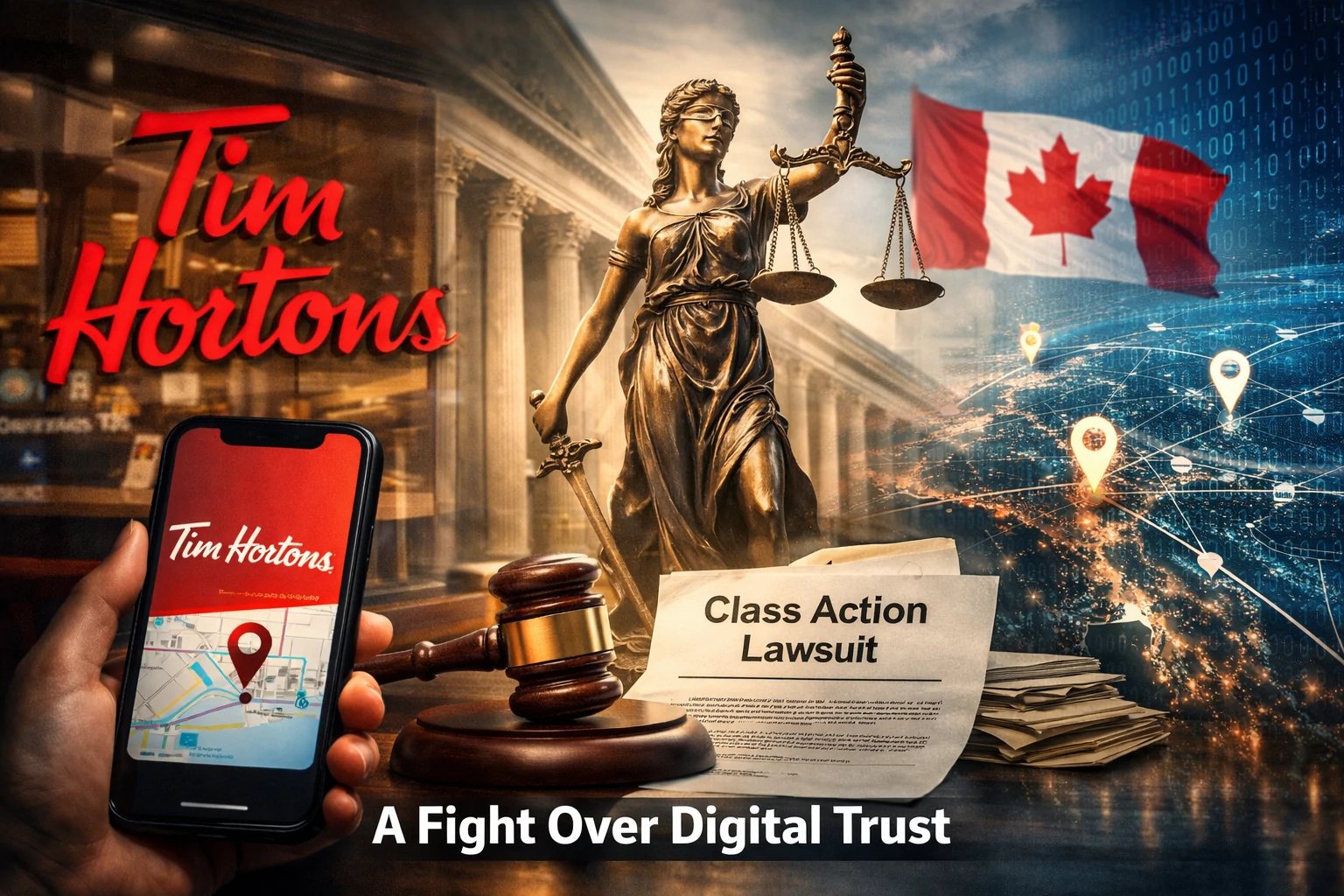
Tim Hortons is a well-known name in Canada. People go there every day for coffee, snacks, and breakfast. Families meet there. Workers stop by before long shifts. It feels like part of daily life. Most people never expected the brand to end up in a courtroom.
The trouble started with a mobile app. Tim Hortons released the app to offer faster service and rewards. People downloaded it to save time and earn points. It seemed helpful. But soon, users noticed something strange. The app did more than take orders. It tracked where people went, even when the app was closed.
This raised alarms. News reports revealed that the app followed users throughout the day. It logged visits to stores, homes, schools, and even places of worship. People felt shocked. Many had no idea the app worked that way.
The Role of Canada’s Privacy Agencies
Once the news broke, Canada’s privacy offices began looking into the app. Federal and provincial teams started to investigate. They wanted to know what the app collected and how that data got used. They spoke with Tim Hortons. They studied the app’s code and behavior.
Their final report confirmed the fears. The app gathered location data many times a day. It shared the data with other companies. It collected more than what people expected. The privacy teams said this broke public trust. They called the actions unreasonable and out of line with Canadian law.
What Made This Lawsuit Different
The case was not just about coffee. It touched something deeper. The lawsuit asked a simple question: Who owns your personal data? Tim Hortons said the tracking improved service. Users said they never agreed to this level of tracking. That clash led to a major legal fight.
People who downloaded the app became part of a class action. They claimed their rights were violated. They said the app gathered private information without real permission. They also said Tim Hortons failed to explain what the app was doing. Many users never saw clear warnings. They trusted the brand and felt betrayed.
This case stood out because of the brand’s deep roots in Canada. People grew up with Tim Hortons. Many saw it as local and safe. So this lawsuit felt personal. It wasn’t just about code and data. It was about honesty and respect.
Similar trust issues have led to lawsuits in other sectors, like the one involving Augusta Precious Metals.
How the Company Explained Itself
The company did not stay silent. Tim Hortons responded to the claims. Leaders said they never used the data to track individual people. They said the app’s goal was to improve user experience. They also said they stopped collecting the data after the issue came to light.
The company made changes to the app. It removed tools that tracked background location. It rewrote parts of the privacy policy. It tried to explain things more clearly. These changes were meant to fix the damage and rebuild trust.
Still, many people felt the apology came too late. They said the app should never have tracked them without full and clear consent. The company’s words did not undo the harm.
The Court’s Involvement and the Settlement
The lawsuit moved through the legal system. Lawyers worked to find a resolution. After months of talks, the parties reached a deal. The court approved a settlement.
Under the settlement, affected users could claim a free drink and a baked good. Some felt that this offer was not enough. They said the harm went beyond free coffee. They wanted stronger action and stricter rules. But others said the settlement sent a clear message. It showed that large companies can face real consequences.
The court noted that the settlement closed the case. But the issue of privacy would not go away. The law would keep evolving. Users would remain more aware of their rights.
Was There a Real Payout?
Many people expected a cash payment from the lawsuit. That did not happen. The settlement focused on small compensation instead of money. Eligible users received a free hot drink and a baked item through the Tim Hortons app.
Some customers felt disappointed. They believed the misuse of personal data deserved stronger compensation. Others understood the outcome. Legal experts explained that privacy cases often end with symbolic rewards rather than large payments, especially when financial harm is hard to measure.
The payout still carried meaning. It confirmed that the company’s actions were questioned and corrected. The real impact came from policy changes and public awareness rather than cash rewards. The case showed that even without large payouts, companies can face consequences and pressure to change.
How People Reacted Across Canada
The public reaction was strong. Social media filled with angry posts. People deleted the app. Some stopped going to the store. Others asked hard questions about data, trust, and control. They wanted to know how the app worked and why it needed so much access.
Some users felt helpless. They had trusted the brand. They had not read the privacy policy. They felt exposed. Others saw this case as a lesson. It showed the need to check app settings and permissions. It reminded people to stay alert in the digital world.
Media channels covered the lawsuit for months. Experts joined the conversation. Lawyers explained the legal side. Tech professionals broke down the app behavior. Privacy advocates called for stronger rules. The case became part of a larger national discussion.
How the Case Changed App Rules
The Tim Hortons lawsuit did not just affect one company. It affected how other brands think about apps and data. After this case, many businesses reviewed their own apps. They looked at what information they collected. They rewrote privacy policies. Some even paused app updates until they fixed risky features.
Tech teams started working more closely with legal experts. They wanted to avoid similar problems. Developers learned that simple design choices could lead to lawsuits. They also saw that public trust is hard to win back once lost.
The case also sparked talks about new laws. Some lawmakers called for clearer consent rules. Others pushed for bigger fines. Privacy groups said this case showed how fast rules must adapt to new tools.
Who Else Saw the User Data
One of the biggest concerns was that Tim Hortons used outside companies to collect data. These companies had tracking systems built into the app. They helped analyze user habits. But many users had no idea third parties were involved.
This raised more questions. Who else saw the data? Where was it stored? Could it be sold or leaked?
The lawsuit showed that working with outside companies adds risks. Brands must now tell users not only what data they collect but who they share it with. Full transparency is no longer optional. It is expected.
Lessons for Consumers
- Even trusted brands can cross privacy limits
- Always review app permissions after install
- Turn off background location access when not needed
- Read privacy notices instead of skipping them
- Remove apps you no longer use
- Speak up when something feels wrong
- Support actions that protect digital rights
- Treat personal data as valuable property
This keeps the section easy to scan, mobile‑friendly, and strong for SEO without breaking your natural writing flow.
Broader Impact on the Business World
The Tim Hortons lawsuit reached far beyond the coffee shop. It sparked new conversations inside boardrooms. Executives across many industries saw the damage it caused. They understood that privacy is no longer just a legal issue. It is now a public issue. Brands cannot afford to ignore it.
Other businesses began to change. App teams reviewed tracking tools. Marketing departments pulled back on aggressive data collection. Legal teams rewrote terms in plain language. These companies did not want to repeat the same mistake. They saw how fast a small app decision could damage years of trust.
Even startups felt the pressure. New businesses often rely on data to grow. But they now face a warning. If they misuse that data, they could face lawsuits early in their journey. The lesson is clear. Build trust first. Growth will follow.
Tim Hortons isn’t the only brand facing privacy claims. Temu is also under legal pressure in Canada.
Legal Experts Weigh In
Lawyers and privacy scholars studied this case closely. Some called it one of the most important digital privacy events in Canada. They said it showed the gap between user understanding and app behavior. Terms of service may look legal. But if people cannot read or understand them, the terms mean nothing.
Legal analysts said the court avoided harsh punishment. The settlement was small. But they agreed that the public message was strong. It reminded companies that legal rights exist in digital spaces, too. Just because an action feels common in the tech world does not mean it is allowed.
Some experts called for stronger laws. They said users should not carry the burden of watching every move. They said the law should protect privacy without needing lawsuits. Others warned that new laws must not stop innovation. They asked for balance.
How Users Can Protect Their Digital Privacy
- Open phone settings and review app permissions
- Allow location access only when the app is in use
- Remove location access from apps that do not need it
- Delete apps you no longer use
- Review permissions once each month
- Read user reviews before downloading new apps
- Question apps that ask for too much access
- Remember that free apps often trade service for data
Lawsuits over trust and transparency are also rising in other industries. Augusta Precious Metals recently faced legal heat over its marketing and sales claims.
Where the Brand Stands Now
Tim Hortons made changes after the lawsuit. The app no longer tracks users in the background. The privacy terms now use simpler words. The company also added more control options. These steps help. But rebuilding trust takes time.
Many customers still love the brand. They visit stores each week. But they may now hesitate before using the app. Some may switch to in-person orders. Others may wait before trusting again.
The brand faces a choice. It can keep talking about coffee, or it can also lead on privacy. If it chooses the second path, it may become stronger. If it avoids the issue, the damage may last longer.
The lawsuit will stay in the public memory. It will be part of Tim Hortons’ history. But how the brand acts from now on will shape what people remember most.
Latest Update on the Tim Hortons Class Action Lawsuit
The lawsuit has moved through the courts. Most of the key decisions are already public. A settlement was reached and approved. The case did not go to trial. Tim Hortons agreed to terms and updated its mobile app.
As of now, users who qualified for the class action have either received or missed the chance to claim the offered items. There is no ongoing legal process linked to this case. The privacy offices have closed their investigations. The company issued public statements and changed its data practices.
The brand continues to face public pressure. Some users remain critical. Others have returned to using the app after changes were made. No new lawsuits have emerged from this issue, but it changed how app tracking is viewed in Canada. This lawsuit is now a reference point for legal, media, and digital privacy discussions.
Looking Ahead: Lessons That Won’t Be Forgotten
The Tim Hortons case didn’t just settle a legal dispute. It opened the door to real questions about how much control users have in the digital world. A quiet tracking feature turned into a public outcry. That says something about where the line is—and how fast users will respond when it’s crossed.
This wasn’t about a glitch or a tech mistake. It was about trust. Brands that ignore that risk more than lawsuits. They risk losing the people who once believed in them.
No court order can rebuild trust overnight. That takes time. That takes action. And that takes a clear choice to respect users from the start. This case forced that conversation. It may not be the last, but it will be one people remember.