
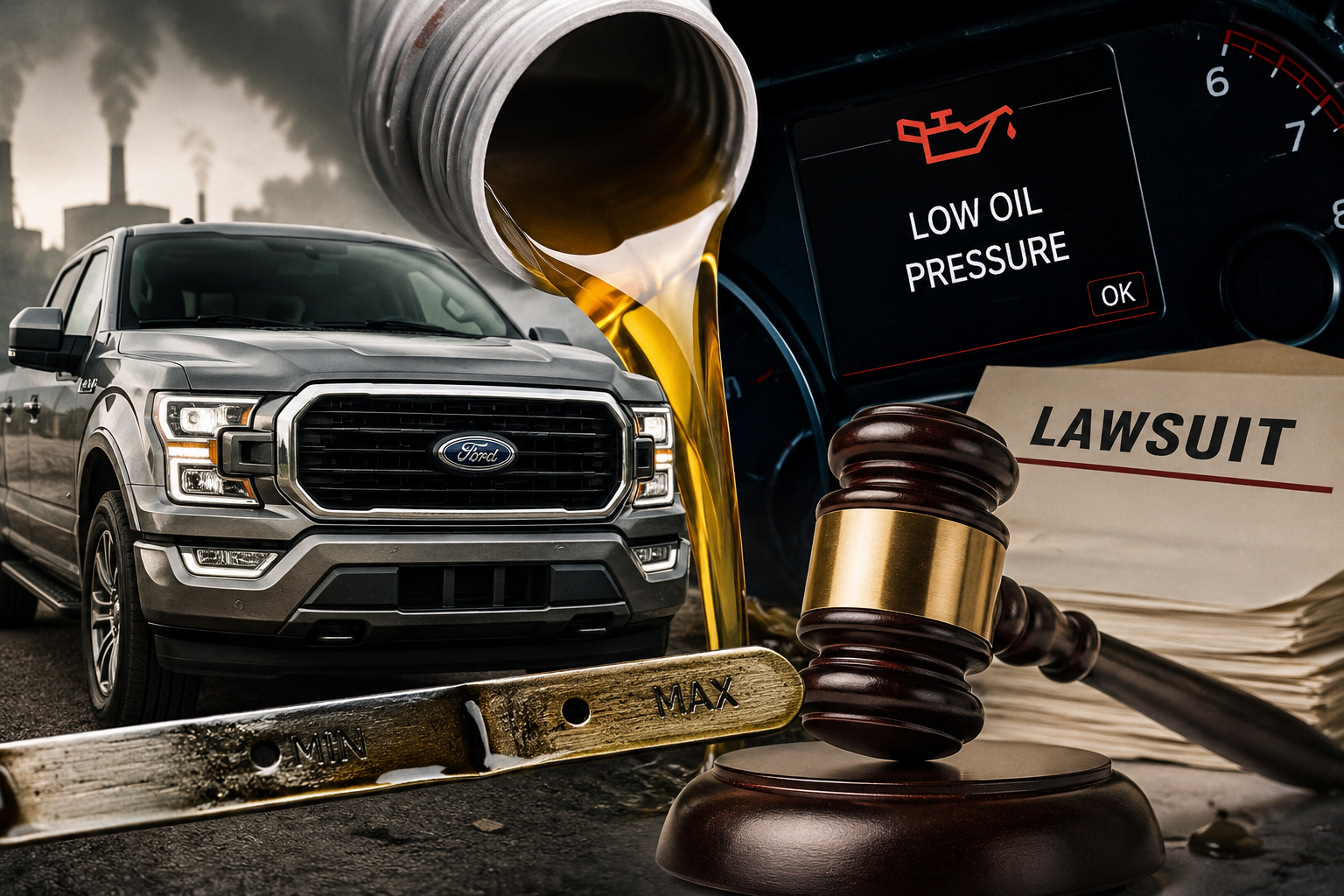
The Ford F-150 stands as one of the best-known trucks in the United States. Many drivers pick this truck because it offers strong towing ability, a comfortable interior, and several engine choices. Owners often rely on it for heavy work, road trips, and daily use. Recent reports, however, raised concerns about engine oil problems in some models.
A large number of owners claimed certain Ford F-150 trucks used far more oil than expected. Drivers said oil levels dropped quickly between regular service visits, even when no leak appeared under the vehicle. Some owners also reported rough engine performance, warning lights, knocking sounds, and costly repairs. These complaints later sparked lawsuits and brought major attention to the Ford F-150 oil consumption issue. Reports from automotive news outlets and consumer law websites also increased pressure on Ford Motor Company.
Ford F-150 Oil Consumption Complaints
Thousands of Ford F-150 owners claimed their trucks used too much engine oil at low mileage. Some drivers said oil levels dropped after only a few thousand miles. Others reported they had to add oil between regular service visits. Low oil levels also caused rough performance and engine warning lights in certain trucks.
Several lawsuits claimed Ford Motor Company knew about the issue but failed to properly warn buyers. Some owners said dealerships described the oil use as “normal” even after repeated complaints. Lawsuit filings focused on possible engine design or calibration defects tied to the problem.
More complaints appeared online as drivers shared similar experiences. Owners reported engine rattles, rough idle, spark plug issues, and failed repair attempts. Attention increased further after reports showed dealerships received technical service bulletins related to oil consumption concerns.
Ford F-150 Models Linked to the Most Oil Complaints
Not every Ford F-150 faced serious oil consumption problems. Complaints mainly focused on certain engines and model years. Several owners still reported normal performance and no unusual oil loss.
The 5.0L Coyote V8 engine received the most attention in lawsuits and owner complaints. Reports often involved 2018 to 2020 Ford F-150 trucks with that engine. Some EcoBoost models also appeared in complaints, but most discussions focused on the V8 oil consumption issue.
| Model Years | Engine | Reported Issue |
|---|---|---|
| 2018-2020 | 5.0L Coyote V8 | Excessive oil consumption |
| 2017-2020 | 3.5L EcoBoost | Oil loss and engine roughness |
| 2018-2021 | 2.7L EcoBoost | Rapid oil level drop |
Drivers often reported similar warning signs regardless of engine type. Some noticed ticking sounds from the engine bay. Others said the truck felt weaker during acceleration or displayed oil warning messages before the next service interval. Several owners claimed the issue continued even after dealership inspections.
Owners Say Their F-150 Started “Drinking Oil”
| Common Symptom | What Owners Reported |
|---|---|
| Low oil warning | Oil level dropped before next service |
| Rough idle | Engine felt unstable at stops |
| Burning oil smell | Strong smell after driving |
| Exhaust smoke | Smoke appeared during acceleration |
| Engine misfire | Shaking or power loss during driving |
Inside the Ford F-150 Oil Mystery: What Could Be Causing It?
Experts and automotive reports linked the Ford F-150 oil consumption issue to possible internal engine defects. Some reports pointed toward piston ring or cylinder wall problems that may allow oil to burn inside the engine. Drivers then notice dropping oil levels even when no leak appears under the truck.
Automotive discussions also focused on software calibration and fuel management system changes. Some owners claimed the issue appeared after updates or after a few thousand miles of use. Heavy towing may increase oil use in certain trucks, but lawsuit filings argued that some affected F-150 models burned oil even during normal daily driving.
Ford’s Big Response After Drivers Raised Oil Concerns
Ford Motor Company responded to complaints through dealership inspections, software updates, and repair procedures. Some service centers also replaced engine parts or changed oil recommendations for affected trucks.
Ford stated that a small amount of oil use can happen in modern engines, especially in turbocharged and high-performance setups. Dealerships often inspected trucks before approving major repairs or engine replacements.
Some owners later reported fewer problems after repairs. Other drivers claimed the issue returned after a short time. Lawsuits also argued that repeated repair visits failed to fully solve the oil consumption problem in certain F-150 models.
Did Ford Recall the F-150 for Oil Consumption?
Many truck owners searched for a recall after hearing about engine oil problems online. A recall, however, differs from a lawsuit or technical service bulletin. Safety recalls usually involve defects that create direct safety risks and require mandatory repairs.
Ford issued service guidance and repair bulletins connected to oil consumption concerns in certain trucks. These actions helped dealerships inspect affected vehicles and apply repair procedures. Still, not every oil consumption complaint resulted in an official recall. Some owners confused technical bulletins with recalls because dealerships still performed inspections and repairs.
Drivers can check the Ford owner support website or the NHTSA recall database using their VIN number to confirm active recalls or service campaigns.
Warranty coverage may still apply even without a recall. Repair approval often depends on mileage, inspection results, service history, and dealership findings. Owners usually benefit from keeping all maintenance records and repair invoices.
What F-150 Owners Should Do Now
Drivers who notice oil loss in their Ford F-150 should act quickly. Early inspection may help prevent major engine damage and expensive repair costs later.
Owners should keep clear records related to the issue, including:
- Oil change receipts
- Repair invoices
- Warning light photos
- Written dealership reports
- Oil consumption test results
Some drivers also contact lemon law or consumer protection attorneys after repeated repair attempts. Warranty rules and legal protections differ by state, but detailed records can help if the problem continues.
How the Oil Consumption Lawsuits May Impact Ford Owners
Research from the LawMonarch team shows that oil consumption lawsuits may affect Ford F-150 owners in different ways. Some cases may lead to settlements, warranty support, or stronger pressure on dealerships to handle complaints more seriously.
Public attention around the lawsuits also raised concerns about resale value. Used truck buyers often search common engine problems before purchase, and reports about excessive oil use may affect buyer confidence in certain F-150 models.
Owners should keep repair records, dealership paperwork, and oil consumption test results instead of relying only on online forums. Every truck condition differs based on mileage, maintenance history, and driving habits.
Ford F-150 Oil Problem That Refuses to Go Away
The Ford F-150 oil consumption lawsuit gained major attention after drivers claimed certain trucks burned oil much faster than expected. Most complaints focused on the 5.0L Coyote V8 engine, though some EcoBoost owners also reported similar issues. Lawsuits linked the problem to costly repairs, lower resale value, and worries about long-term engine reliability.
Owners who notice low oil levels, warning lights, or rough engine performance should document everything early and request a professional inspection. Oil consumption tests, repair invoices, and dealership reports may become important if the issue continues. Lawsuits, technical service bulletins, and owner complaints still shape the discussion as drivers search for clear answers and lasting repairs.