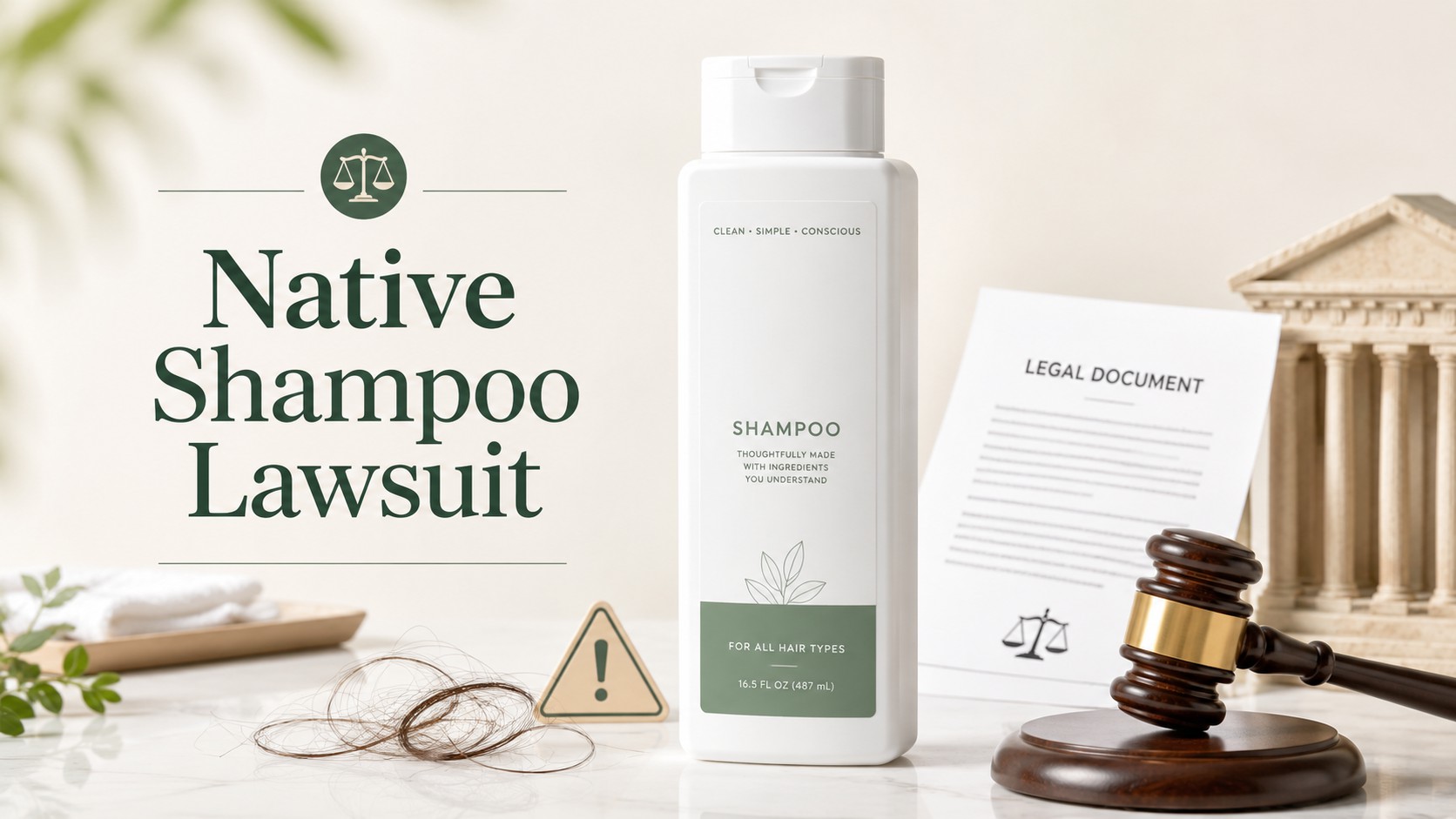
Native shampoo is not linked to a confirmed class action settlement at this time. Online posts have raised concerns about hair loss and possible PFAS chemicals, but those claims have not led to a court ruling that proves Native shampoo causes hair damage or another medical condition.
A legal investigation reviewed possible false advertising and product content concerns linked to Native personal care items. That review later closed without an announced lawsuit or settlement. Customer complaints still deserve attention, yet personal experiences alone cannot confirm that one shampoo caused shedding, scalp irritation, or lasting harm.
Native Shampoo Lawsuit Status
As of July 24, 2026, no confirmed Native shampoo lawsuit, settlement, court case number, or active claim form has been announced. ClassAction.org previously reviewed possible PFAS concerns linked to Native products, but the investigation later closed without a filed lawsuit.
An attorney investigation is not the same as a court case. Lawyers may examine customer complaints, labels, purchase records, and test data before they decide whether enough evidence exists to file a claim. In this matter, no confirmed Native shampoo complaint reached a court.
A class action must begin with a filed complaint and later receive court approval under Federal Rule 23. No court has ruled that Native shampoo contains PFAS or causes hair loss.
What Started Concern About Native Products
Native built its reputation around simple personal care products and clean brand language. Procter & Gamble acquired the company in 2017 and later expanded its range into shampoo, conditioner, body wash, skin care, and sun care. Legal attention did not start with hair loss claims. Attorneys first reviewed concerns that certain Native products might contain PFAS despite marketing that focused on naturally derived or simple ingredients.
The investigation covered shampoo, conditioner, body wash, lotion, deodorant, and toothpaste. Its main focus was product content, label claims, and possible false advertising. It did not prove that Native shampoo caused baldness, scalp damage, cancer, or any other medical condition.
Does Native Shampoo Contain PFAS?
No court ruling or public test result has confirmed that Native shampoo contains PFAS. Attorneys reviewed several Native products due to ingredient and marketing concerns, but the inclusion of four shampoos did not prove that PFAS were present in every bottle.
PFAS Claims and Hair Loss Reports Are Separate Issues
PFAS stands for per- and polyfluoroalkyl substances. Certain chemicals in this group can remain in the environment and build up over time. EPA research links exposure to specific PFAS with possible effects on cholesterol, liver health, immune response, reproduction, development, and certain cancers. Risk can change based on the type of chemical, exposure level, dose, and length of contact. These wider concerns do not prove that every Native shampoo contains harmful PFAS levels or that one bottle caused a person’s symptoms.
Hair loss complaints are a separate part of the issue. Customers have shared reports of shedding, dryness, breakage, itching, and reduced hair density after they used Native hair products. News reports have covered these experiences, but no firm evidence has shown that Native shampoo causes widespread hair loss. Product testing, lab results, exposure records, and medical evidence would be needed to support such a claim.
Native Products Named in the Legal Investigation
Lawyers reviewed several Native product categories during the PFAS inquiry. Four shampoos appeared on that list. Conditioners with similar scents also appeared.
| Product type | Items listed in the investigation |
|---|---|
| Shampoo | Coconut & Vanilla, Cucumber & Mint, Almond & Shea Butter, Citrus & Herbal Musk |
| Conditioner | Coconut & Vanilla, Cucumber & Mint, Almond & Shea Butter, Citrus & Herbal Musk Daily Conditioner |
| Other items | Selected body washes, lotions, deodorants, and toothpastes |
Inclusion on an investigation list does not mean a product was found defective. It only means attorneys considered it relevant to their review. No court ruling on that page states that these shampoos contained PFAS or that their labels broke consumer laws.
Formula changes can also occur over time. A current bottle may not match an older version. Anyone with concerns should save the exact container, batch code, purchase receipt, and full ingredient label instead of relying on a general product name.
Does Native Shampoo Cause Hair Loss?
Available information does not prove that Native shampoo causes hair loss across its customer base. Online posts can reveal a pattern worth review, but they cannot confirm medical cause on their own. A person may notice shedding after a product change even when another health or hair care factor caused the problem.
Hair loss can result from stress, illness, hormones, genetics, tight hairstyles, scalp infection, immune conditions, medicine, poor nutrition, or physical damage. A dermatologist may use an exam, blood tests, or a scalp biopsy to find a likely cause.
Shampoo can still cause a reaction in certain people. Fragrance, preservatives, cleansing agents, or plant extracts may irritate a sensitive scalp. An allergic response can cause redness, itching, flakes, or a rash. Scratching and inflammation may then add to breakage or temporary shedding. Such a reaction does not mean that every customer will face the same result.
Steps to Take After a Shampoo Reaction
Stop use if a product appears to cause burning, severe itching, swelling, rash, sores, or unusual hair loss. Do not keep testing it on your scalp to gather proof. FDA guidance advises consumers to stop using a cosmetic product and contact a healthcare provider when an unexpected reaction occurs.
Useful steps include:
- Photograph your scalp and hair under clear light.
- Save the bottle, box, batch code, and ingredient label.
- Keep your receipt or online order record.
- Write down when use began and when symptoms appeared.
- Record other hair products, medicines, illnesses, or diet changes.
- Contact a dermatologist if shedding continues or bald patches appear.
- Report the reaction to Native and the FDA.
- Keep copies of medical bills and company replies.
Could a Native Shampoo Class Action Still Happen?
A future case could still happen if new lab results, a recall, regulatory action, company records, or similar injury reports appear. Any new lawsuit would be separate from the closed PFAS investigation and would need clear facts that connect affected customers. A separate guide explains the Raw Sugar shampoo lawsuit and the claims linked to that brand.
A viral post does not create settlement rights. A court must first approve a class action, and real notices include a court name, case number, deadlines, eligibility rules, and an official claim administrator.
Legal Claims That Could Be Considered
A possible case could focus on consumer protection laws if marketing did not match product content. Plaintiffs might argue that they would not have bought the shampoo, or would have paid less, if accurate facts had appeared on its label. Success would depend on exact wording, test evidence, state law, and proof of loss.
A physical injury claim would require a different case record. Medical reports must help connect the reaction to a product. Timing can support a claim, but timing alone may not settle cause. Prior health issues, other products, chemical treatments, stress, and hormone changes could affect the result.
Warranty or product defect claims may also arise in certain cases. Each state sets its own legal rules and filing limits. Anyone with serious harm should speak with a licensed attorney in the state where the purchase or injury occurred. This article gives general information and does not replace legal advice.
Evidence That May Support a Product Claim
Keep the shampoo bottle, batch code, ingredient label, receipt, and online order details. Take clear photos of the product and your scalp. Write down how often you used it, when the symptoms started, and whether they improved after you stopped.
Medical records may offer stronger support than social media posts alone. A dermatologist can check for irritation, breakage, infection, allergic contact dermatitis, telogen effluvium, or another cause. Keep copies of test results, treatment notes, medical bills, and any messages sent to the company.
Conclusion
Talk about a Native shampoo lawsuit grew from two separate concerns. One involved a legal review of possible PFAS content and clean marketing claims. Another came from customers who described hair loss or scalp problems after product use.
Current facts do not show an active class action or settlement tied to the completed PFAS inquiry. They also do not prove that Native shampoo causes widespread hair loss. Customer experiences deserve attention, but fair reporting must keep allegations apart from established facts.
A person who faces a reaction should stop use, save evidence, report the event, and contact a dermatologist. Serious or lasting harm may also justify advice from a local product liability attorney. Clear records offer far greater value than rumors, screenshots, or viral claims.
Common Questions
No official court case number has been announced for a Native shampoo lawsuit. The PFAS matter remained an attorney investigation and later closed without a filed court complaint.
A genuine notice normally includes the court name, case number, claim deadline, eligibility rules, and official administrator details. Social media posts without this information should not be treated as proof of a settlement.
Cosmetic reactions can be reported to the FDA and the product company. Keep the bottle, batch code, receipt, photos, and medical records in case further review becomes necessary.
Personal reports can highlight a concern, but they do not prove medical cause. A dermatologist may need to check other possible causes, such as illness, stress, scalp conditions, hormones, or product sensitivity.